
The journey of telescope technology is nothing short of remarkable. From the first telescopic observations in the early 17th century to the sophisticated instruments of today, these advancements have revolutionized our understanding of the universe. Join us as we explore the top five milestones in telescope technology that have shaped modern astronomy.
Whether you’re a budding astronomer or a space enthusiast, these achievements not only highlight the ingenuity of their time but also continue to inspire generations. Let’s dive into the most significant breakthroughs that have expanded our cosmic horizons!
1. Galileo’s Telescope – The Revolutionary Beginning
In 1609, Galileo Galilei transformed the way we view the heavens with his improved telescope. His observations of celestial bodies such as Jupiter’s moons and the phases of Venus laid the groundwork for modern astronomy.
Key Features:
- First to systematically observe celestial bodies.
- Improved design over previous models for better clarity.
- Revolutionized our understanding of planetary motion.
Pros:
- Changed the perception of the universe.
- Confirmed the heliocentric model.
- Inspired future astronomical studies.
Cons:
- Limited magnification capabilities.
- Challenges in design and construction quality.
- View limited by atmospheric conditions.
2. Isaac Newton’s Reflecting Telescope – A New Type of Lens
In 1668, Isaac Newton created the first practical reflecting telescope, overcoming the chromatic aberration found in refractors. Using mirrors instead of lenses, Newton’s design allowed for larger telescopes with clearer images.
Key Features:
- Utilizes mirrors for improved image resolution.
- Scalable for larger builds without distortion.
- Reduced chromatic aberration significantly.
Pros:
- More powerful than refractor designs.
- Enabled the construction of larger telescopes.
- Foundation for modern telescope designs.
Cons:
- Requires regular maintenance and mirror alignment.
- Potential for mirror defects impacting image quality.
- Can be more complex to manufacture.
3. The Hubble Space Telescope – A New Perspective
Launched in 1990, the Hubble Space Telescope has provided unparalleled views of the universe. It has captured breathtaking images and has made groundbreaking discoveries, greatly enhancing our knowledge of galaxies, stars, and exoplanets.
Key Features:
- Orbits above Earth’s atmosphere for unobstructed views.
- Wide range of imaging capabilities across wavelengths.
- Long exposure times for deep-space imaging.
Pros:
- Revolutionized our understanding of the universe.
- Significant contributions to cosmology and astrophysics.
- Exceptionally durable with regular updates and repairs.
Cons:
- Expensive to build and maintain.
- Requires coordination with Earth-based operations.
- Age-related mechanical issues can occur.
4. The Very Large Array – Radio Astronomy Revolutionized
Operational since 1980, the Very Large Array (VLA) in New Mexico is a radio telescope array that enables astronomers to study celestial phenomena using radio wavelengths. Its ability to combine multiple dishes creates a powerful tool for understanding cosmic events.
Key Features:
- 27 individual antennas working together for high-resolution imaging.
- Capable of studying various astronomical phenomena including pulsars and quasars.
- Flexible and can be reconfigured for different observational needs.
Pros:
- Versatile for different types of astronomical research.
- Significant improvements in data collection and analysis.
- Collaborative efforts enhance the scope of discoveries.
Cons:
- Limited to areas of the sky visible from New Mexico.
- Dependency on weather conditions for observations.
- Requires extensive data processing capabilities.
5. James Webb Space Telescope – The Next Generation
Launched in December 2021, the James Webb Space Telescope (JWST) is designed to succeed Hubble with enhanced capabilities to observe the earliest galaxies and exoplanets. Its advanced technology promises to reveal new insights into the origins of the universe.
Key Features:
- Infrared imaging for observing distant and faint objects.
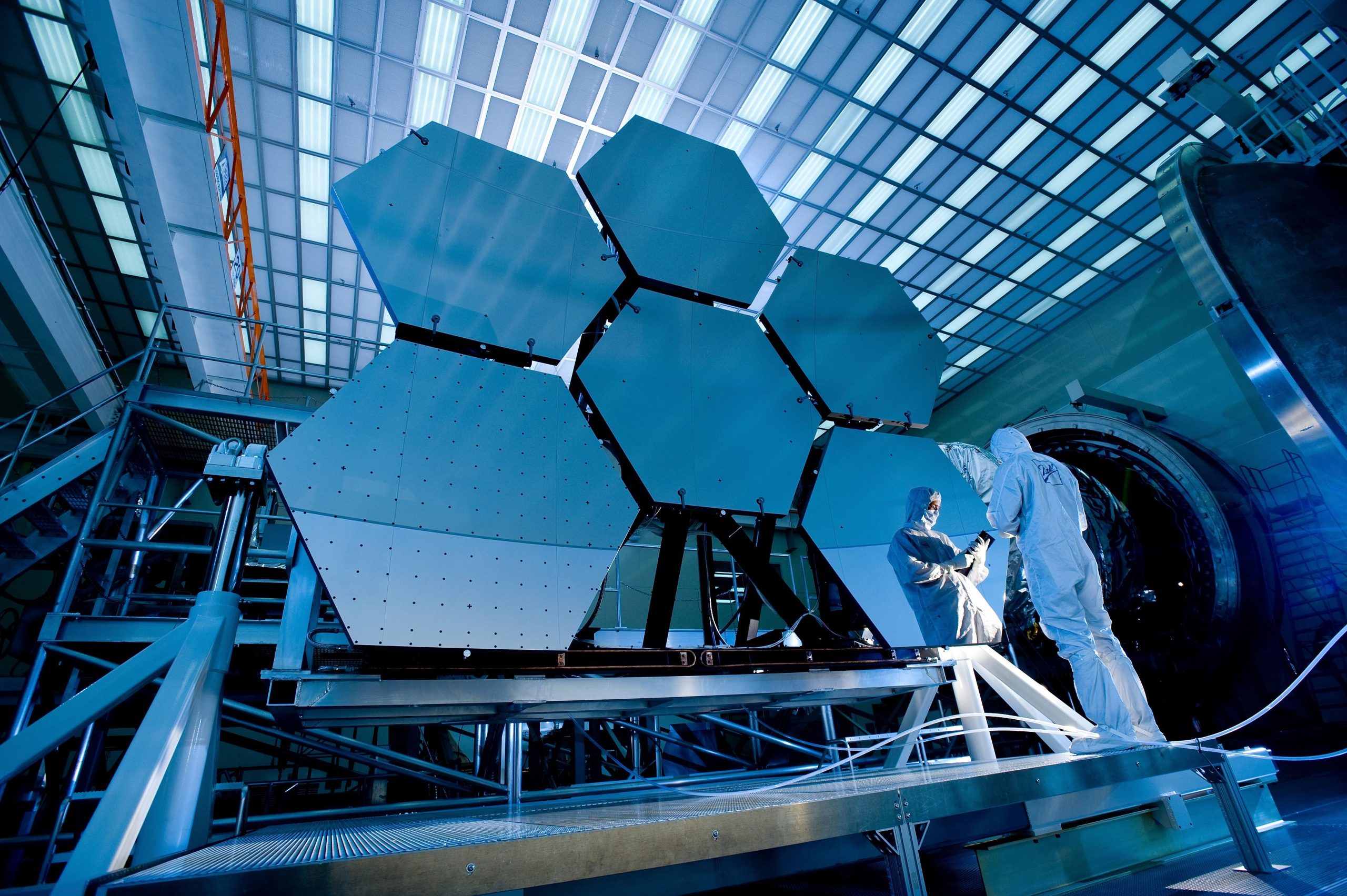
- Large segmented mirror for improved sensitivity.
- Designed to operate at the second Lagrange point (L2), 1.5 million kilometers from Earth.
Pros:
- Groundbreaking potential for deep-space research.
- Ability to see through cosmic dust clouds.
- Collaboration among international space agencies.
Cons:
- High construction and operational costs.
- Complex deployment and calibration processes.
- Exposed to more potential risks due to its location.
How to Choose a Telescope?
When selecting a telescope, consider your primary interests—whether it’s planetary observation, deep-sky astrophotography, or general stargazing. Assess the location for observing with consideration of light pollution, and ensure you account for your budget and the telescope type, whether refractor, reflector, or compound. Lastly, evaluate the availability of accessories, and don’t hesitate to start with a beginner-friendly model before advancing to more complex instruments.
#Telescopes #Astronomy #Galileo #JamesWebb #Hubble #SpaceExploration #Astrophysics #TelescopeTechnology