
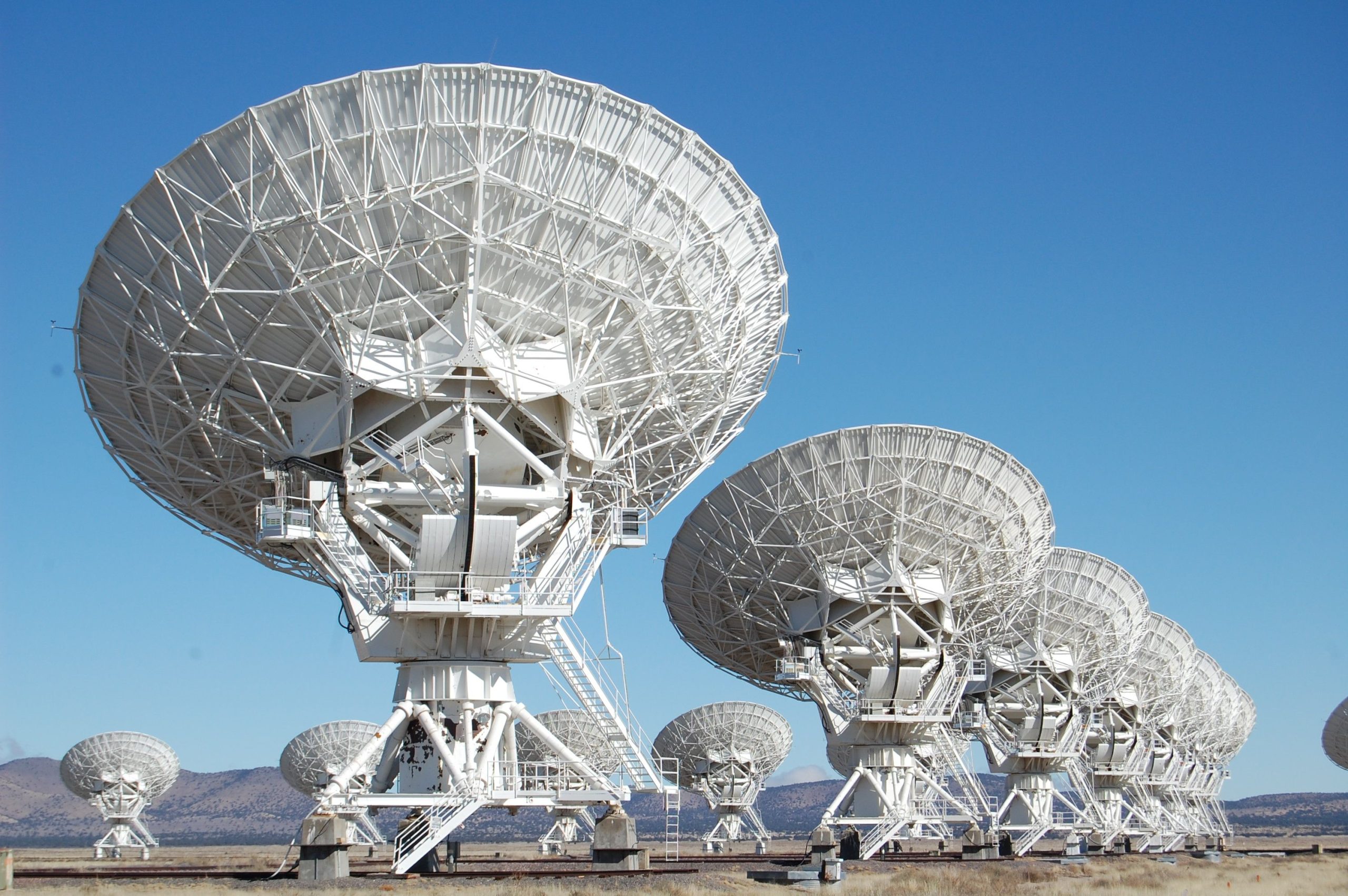
Have you ever looked up at the night sky and wondered what’s out there? Radio astronomy has opened a portal to the universe, unveiling the hidden wonders beyond our sight. From pulsars to cosmic microwave background radiation, the discoveries made in radio astronomy have fundamentally changed our understanding of the cosmos.
This listicle highlights the top seven groundbreaking discoveries in the field of radio astronomy that have helped map our universe. Whether you’re a science enthusiast or just curious about our celestial neighborhood, these revelations will astonish you!
1. The Cosmic Microwave Background (CMB) – Best For Understanding the Big Bang
The discovery of the Cosmic Microwave Background radiation is one of the cornerstones of modern cosmology. This faint glow is the remnant heat from the Big Bang, providing invaluable insights into the early universe.
Key Features:
- First detected by Arno Penzias and Robert Wilson in 1965.
- Uniform radiation observed in all directions of space.
- Key evidence supporting the Big Bang theory.
Pros:
- Expanded understanding of the universe’s origin.
- Supported the theory of cosmic inflation.
- Informs models of cosmic structure formation.
Cons:
- Requires complex equipment for detection.
- Interpretation can be challenging and requires advanced theories.
2. Pulsars – Best For Timekeeping and Investigation of Extreme Physics
Discovered in 1967 by Jocelyn Bell Burnell, pulsars are rotating neutron stars that emit beams of radiation. Their precise regularity makes them cosmic lighthouses with applications in advanced timekeeping and testing theories of gravity.
Key Features:
- Highly regular rotation period.
- Strong magnetic fields produce beams of radiation.
- Vital for understanding stellar evolution and neutron star physics.
Pros:
- Invaluable for astrophysical research.
- Serve as cosmic clocks for precision measurements.
- Enhance knowledge of exotic states of matter.
Cons:
- Finite lifetime leads to challenges in long-term study.
- Not all pulsars are detectable from Earth.
3. Quasars – Best For Revealing Energetic Celestial Objects
Quasars are among the brightest and most distant objects known in the universe. Their discovery in the 1960s unlocked a new understanding of how massive black holes affect their surroundings and the evolution of galaxies.
Key Features:
- Extremely luminous, powered by supermassive black holes.
- Found billions of light-years away, acting as a window to early universe.
- Serve as indicators of cosmic distance and expansion.
Pros:
- Help illuminate the period of galaxy formation.
- Increase understanding of black hole dynamics.
- Provide distance benchmarks for cosmic measurements.
Cons:
- Challenges in confirming their nature due to brightness variability.
- Age and lifecycle theories are still being studied.
4. The Epoch of Reionization – Best For Understanding Cosmic Dawn
Radio observations have allowed scientists to study the Epoch of Reionization, the period when the universe transitioned from opaque to transparent. This discovery marks a significant phase in cosmic history and helps trace the formation of the first stars and galaxies.
Key Features:
- Studies cosmic microwave background fluctuations.
- Involves mapping the distribution of hydrogen gas in the universe.
- Reveals the onset of star formation and galaxy evolution.
Pros:
- Critical for understanding early universe structure.
- Offers insights into the behavior of the first generations of stars.
- Helps construct a timeline of cosmic history.
Cons:
- Data collection and analysis are intricate and resource-intensive.
- Theoretical models still require refinement.
5. Galactic Radio Jets – Best For Unraveling Energy Mysteries
Radio jets emitted from supermassive black holes help illustrate the processes that govern the universe’s most energetic phenomena. Discovered in various galaxies, these jets provide insight into massive black hole interactions and the resulting acceleration of particles.
Key Features:
- Jets ejected at near-light speeds.
- Can extend thousands of light-years into space.
- Provide clues to the dynamics of black hole activity.
Pros:
- Enhance understanding of relativistic physics.
- Contribute to cosmic ray research.
- Illustrate how galaxies evolve over time.
Cons:
- Understanding jet composition requires complex modeling.
- Observation can be hindered by interstellar dust.
6. HI 21 cm Line – Best For Mapping Hydrogen in the Universe
The HI 21 cm line is a crucial wavelength used to map neutral hydrogen gas in the universe. This discovery has transformed our knowledge of galactic structures and the distribution of material in space.
Key Features:
- Emitted by neutral hydrogen atoms, revealing galaxy rotation curves.
- Effective tool for measuring cosmic distances.
- Provides insights into dark matter distribution.
Pros:
- Essential for studying galaxy formation and evolution.
- Wide field of view for large-scale surveys.
- Helps unveil cosmic structures over vast distances.
Cons:
- Requires large-scale radio telescopes for effective observation.
- Data interpretation can be complicated by noise.
7. Fast Radio Bursts (FRBs) – Best For Predicting Cosmic Events
Fast Radio Bursts are brief, intense flashes of radio waves from distant galaxies. Their enigmatic nature makes them a thrilling subject of study, with potential implications for understanding cosmic events and the properties of space-time.
Key Features:
- Last only milliseconds but release tremendous energy.
- Sources often remain unidentified, spurring ongoing research.
- Can provide insights into the intergalactic medium.
Pros:
- Expand knowledge of high-energy astrophysics.
- Potential for offering insights into dark matter and dark energy.
- Incentives to explore new theories of the universe’s structure.
Cons:
- Detection is sporadic and unpredictable.
- Understanding the mechanism behind FRBs remains elusive.
How to Choose Your Exploration in Radio Astronomy
When delving into radio astronomy, consider what fascinates you the most. Whether it’s the birth of stars, black hole dynamics, or the distribution of hydrogen gas, each discovery offers unique avenues for exploration. Pay attention to both theoretical implications and observational technologies available, and always stay updated with the latest research, as this fascinating field continually evolves.
#RadioAstronomy #CosmicDiscoveries #Astrophysics #AstronomyLovers #SpaceScience #CosmicMapping #UniverseExploration #StarFormation