
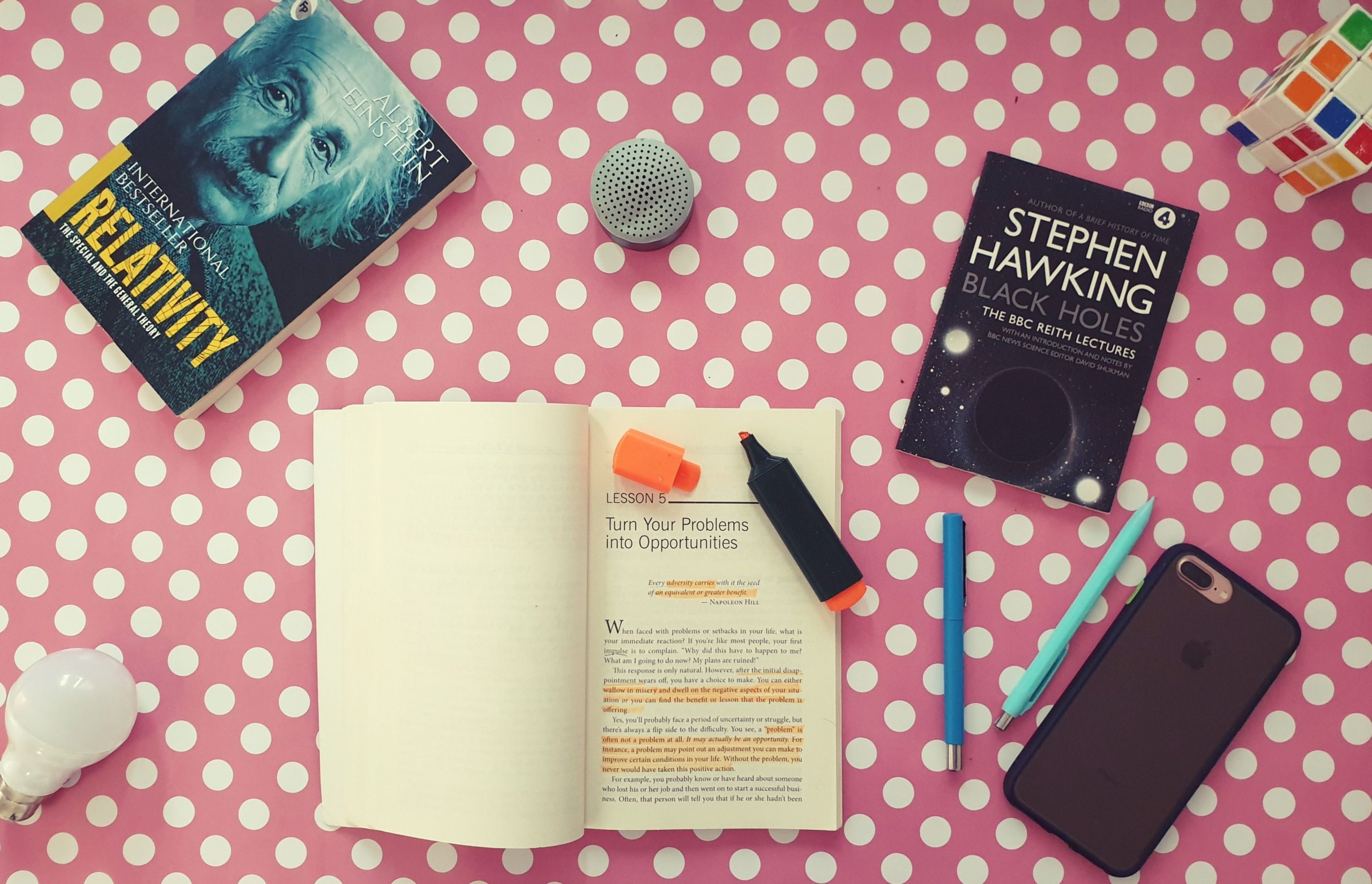
Are you ready to dive into the fascinating worlds of physics and mathematics? Whether you’re a student looking for exciting reads or an enthusiast eager to expand your knowledge, this list has something for everyone. These books present complex concepts in an engaging way, making science and math accessible and fun.
From groundbreaking theories to mathematical wonders, discover ten of the best popular literature books that illuminate the beauty of physics and mathematics!
1. A Brief History of Time by Stephen Hawking – Best for Understanding the Cosmos
This classic book takes readers on a journey through time and space, exploring black holes, the Big Bang, and the nature of the universe. Hawking’s ability to explain complex theories in simple terms makes this a must-read.
Key Features:
- Explores fundamental concepts of cosmology.
- Accessible writing style for general audiences.
- Illustrates the marvels of the universe.
Pros:
- Engaging and thought-provoking.
- Widely acclaimed and influential.
- Offers insights into Hawking’s life and work.
Cons:
- Some concepts might still be challenging for beginners.
- May require background knowledge for deeper understanding.
2. The Elegant Universe by Brian Greene – Best for String Theory Enthusiasts
Brian Greene masterfully introduces string theory, explaining how it could unify the laws of physics. This book not only explores complex theories but also engages readers with captivating storytelling.
Key Features:
- Covers the scientific journey towards understanding string theory.
- Combines clear explanations with vivid imagery.
- Encourages a rethinking of the fundamental nature of reality.
Pros:
- Highly informative and well-researched.
- Grabs attention with stunning analogies.
- Great for both novices and advanced readers.
Cons:
- Some readers may find it too detailed.
- String theory can be abstract and hard to visualize.
3. Gödel, Escher, Bach: An Eternal Golden Braid by Douglas Hofstadter – Best for Interdisciplinary Thinkers
This Pulitzer Prize-winning book intricately weaves together the works of mathematician Kurt Gödel, artist M.C. Escher, and composer Johann Sebastian Bach. It explores the connections between math, art, and music, providing a unique perspective on cognition and creativity.
Key Features:
- Interlinks diverse fields of study.
- Encourages creative thinking.
- Explores recursion and self-reference.
Pros:
- Innovative and thought-provoking.
- Engages readers with enjoyable dialogues.
- Inspires connections across disciplines.
Cons:
- Complex ideas may overwhelm some readers.
- Requires dedicated attention to grasp fully.
4. The Code Book: The Science of Secrecy from Ancient Egypt to Quantum Cryptography by Simon Singh – Best for History Buffs
Simon Singh examines the history of cryptography, shedding light on how secret codes have shaped our world. Full of intrigue and adventure, this book is perfect for those interested in the intersection of mathematics and history.
Key Features:
- Covers historical and modern cryptographic techniques.
- Explains mathematical foundations of codes.
- Illustrates real-world applications and implications.
Pros:
- Highly engaging storytelling.
- Well-researched and informative.
- Appeals to a wide range of readers.
Cons:
- Could be too historical for some readers.
- Technical details may confuse casual readers.
5. The Joy of x: A Guided Tour of Math, from One to Infinity by Steven Strogatz – Best for Math Enthusiasts
Steven Strogatz takes readers on a delightful journey through math, from basic concepts to infinitesimal calculus. This book makes math feel alive, showing its relevance in everyday life and its beauty.
Key Features:
- Covers a range of mathematical concepts in an engaging manner.
- Relates mathematics to real-world scenarios.
- Encourages appreciation for the subject.
Pros:
- Accessible and enjoyable for all levels.
- Uses humor and personal anecdotes.
- Promotes mathematical literacy.
Cons:
- Not for those seeking advanced mathematical theories.
- Some may find it light on technical details.
6. Why Does E=mc²? (And Why Should We Care?) by Brian Cox and Jeff Forshaw – Best for Curious Minds
This book breaks down Einstein’s famous equation, making it comprehensible and connecting it to everyday life. Cox and Forshaw engage readers in understanding why this equation matters in the grand scheme of physical reality.
Key Features:
- Explains the significance of E=mc² in simple terms.
- Connects theory with practical applications.
- Insightful exploration of space-time.
Pros:
- Clear and entertaining writing style.
- Engaging for readers new to physics.
- A great bridge for deeper studies in science.
Cons:
- May oversimplify complex topics.
- Some advanced readers may find it rudimentary.
7. The Man Who Knew Infinity: A Life of the Genius Ramanujan by Robert Kanigel – Best for Inspirational Stories
This biography tells the story of mathematician Srinivasa Ramanujan, who overcame immense odds to make significant contributions to mathematics. Kanigel beautifully narrates Ramanujan’s journey through hardship and brilliance.
Key Features:
- Highlights the struggles and triumphs of a mathematical genius.
- Provides context on mathematical discoveries.
- Inspires passion for mathematics and personal perseverance.
Pros:
- Deeply inspiring and well-crafted narrative.
- Appeals to readers beyond mathematics.
- Offers a glimpse into historical mathematical society.
Cons:
- Some readers may find the pacing slow.
- Focuses primarily on Ramanujan’s life, rather than detailed math concepts.
8. Hidden Figures: The American Dream and the Untold Story of the Black Women Mathematicians Who Helped Win the Space Race by Margot Lee Shetterly – Best for Social Justice Advocates
This inspiring work highlights the contributions of African American women mathematicians at NASA, emphasizing their critical roles behind the scenes in rocket science and space exploration.
Key Features:
- Integrates history with mathematical achievements.
- Shows the intersection of race, gender, and professional achievement.
- Unveils the personal stories of pioneering women.
Pros:
- Empowering and enlightening narrative.
- Calls attention to overlooked contributions in STEM fields.
- Captivating real-life accounts.
Cons:
- Focus may be more historical than mathematical.
- Some may desire more technical depth.
9. Complexity: A Guided Tour by Melanie Mitchell – Best for Understanding Complex Systems
This book provides an overview of complexity science, exploring how simple rules can lead to complex behaviors in natural systems. Mitchell connects concepts from various disciplines, making it a valuable read for those interested in emergence and systems thinking.
Key Features:
- Explains complex systems in an approachable manner.
- Draws on examples from biology, computer science, and physics.
- Sparks curiosity about the interconnectedness of systems.
Pros:
- Engaging and insightful writing.
- Broad applicability across different fields.
- Encourages philosophical and scientific thinking.
Cons:
- Some concepts may be too theoretical for casual readers.
- Could use more concrete examples.
10. Fermat’s Enigma: The Epic Quest to Solve the World’s Greatest Mathematical Problem by Simon Singh – Best for Mathematics Aficionados
This book chronicles the story of Fermat’s Last Theorem and the centuries-long quest to prove it. Singh’s narrative combines history, biography, and mathematics, captivating the reader with the drama of intellectual pursuit.
Key Features:
- Blends math history with a compelling narrative.
- Introduces key mathematicians and their contributions.
- Details the eventual proof of a long-standing mystery.
Pros:
- Engaging storytelling style.
- Accessible to readers without advanced mathematics background.
- Inspires appreciation for mathematical exploration.
Cons:
- Some readers may find technical parts challenging.
- Historical aspects might overshadow math content.
How to Choose the Right Book
When selecting a book from this list, consider your interests and current knowledge level. Think about whether you prefer biographies, history, theoretical concepts, or practical applications. This will help ensure you find a book that both captivates and educates you!
#PhysicsBooks #MathLiterature #PopularScience #ScienceForEveryone #InspiringReads