
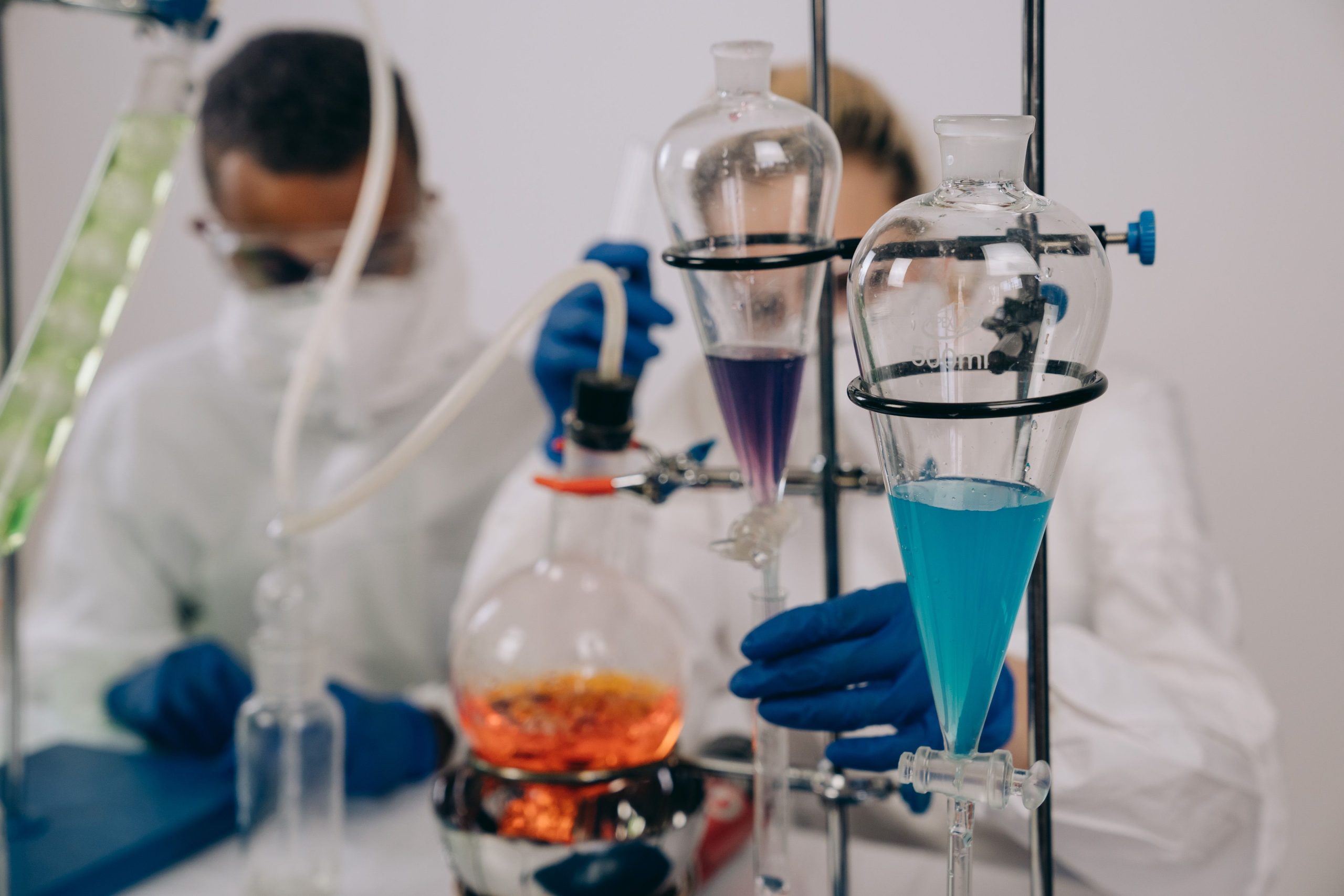
Are you curious about the cutting-edge techniques that drive progress in analytical chemistry? Whether you’re a student, researcher, or professional in the field, understanding the best analytical chemistry lab techniques is essential for accurate results and innovative discoveries. This listicle highlights the top 10 techniques that are revolutionizing the field today.
From high-resolution imaging to advanced spectrometry, each technique serves a unique purpose and can enhance your lab’s capabilities. Let’s dive right in!
1. High-Performance Liquid Chromatography (HPLC) – Best for Purity Analysis
HPLC is a versatile technique used for separating, identifying, and quantifying components in a mixture. It provides detailed information on compound purity and concentration, making it essential in pharmaceutical and environmental labs.
Key Features:
- High separation efficiency
- Quantitative analysis capabilities
- Wide application range
Pros:
- Fast and reliable results
- Minimal sample preparation
- Excellent for analyzing complex mixtures
Cons:
- Requires expensive equipment
- Skill level needed for operation
- Potential for contamination issues
2. Gas Chromatography (GC) – Best for Volatile Compounds
Gas chromatography is ideal for separating and analyzing volatile substances, making it a favorite in environmental and food quality labs. Its ability to detect minute trace levels in mixtures is unmatched.
Key Features:
- Fast analysis times
- High sensitivity
- Simplicity of operation
Pros:
- Effective for gaseous and liquid samples
- Relatively low operational costs
- Robust and reproducible results
Cons:
- Limited to volatile compounds
- Requires thorough sample prep for non-volatile samples
- Potentially hazardous to health without proper safety measures
3. Mass Spectrometry (MS) – Best for Molecular Identification
Mass Spectrometry is pivotal for characterizing molecular weights and structures. Its combinatory power with chromatography allows for unparalleled insights into molecular composition.
Key Features:
- High precision in molecular identification
- Ability to analyze complex mixtures
- Structural elucidation capabilities
Pros:
- Incredibly sensitive
- Can analyze ultralow sample concentrations
- Applicable in various fields like forensics and proteomics
Cons:
- Expensive instrumentation
- Requires highly trained staff
- Limited by sample volatility
4. Nuclear Magnetic Resonance (NMR) Spectroscopy – Best for Structural Analysis
NMR spectroscopy provides detailed information about molecular structure and dynamics. It is indispensable in organic chemistry for confirming compound identities.
Key Features:
- Functional group identification
- Quantum mechanical properties of nuclei
- Detailed molecular structure elucidation
Pros:
- Non-destructive testing
- Rich structural information
- Simplifies complex mixtures
Cons:
- High equipment costs
- Lengthy data acquisition times
- Requires specialized interpretation
5. Fourier Transform Infrared Spectroscopy (FTIR) – Best for Functional Group Identification
FTIR spectroscopy is an effective method for obtaining an infrared spectrum of absorption or emission. It helps identify organic and inorganic compounds based on their functional groups.
Key Features:
- Quick sample analysis
- Little to no sample preparation
- Wide range of applications
Pros:
- Non-destructive and fast
- Can handle solids, liquids, and gases
- Highly informative spectra
Cons:
- Overlapping absorption bands can complicate analysis
- Limited to molecular solids and liquids
- Requires skilled interpretation
6. Ultraviolet-Visible Spectroscopy (UV-Vis) – Best for Concentration Determination
This technique is widely used for quantitative analysis of solutions based on light absorption. It is particularly useful for determining concentrations of compounds in various samples.
Key Features:
- Fast and economical
- Simple operation
- High throughput
Pros:
- Effective for colored solutions
- Suitable for a wide range of applications
- Inexpensive compared to other techniques
Cons:
- Limited to chromophores
- Requires careful sample handling
- Not suitable for turbid samples
7. Titration – Best for Concentration Assessment
This classic technique allows for the precise determination of an unknown concentration via a vigorous reactant. A staple in both educational and research settings, titration remains critically effective.
Key Features:
- Highly accurate results
- Widely applicable across many fields
- Inexpensive and straightforward
Pros:
- No expensive equipment needed
- Versatile for various chemical reactions
- Excellent educational tool for students
Cons:
- Time-consuming process
- Errors can arise from subjective endpoint detection
- Highly dependent on skill level
8. Electrochemical Analysis – Best for Sensitive Detection
Electrochemical methods offer powerful means of analyzing chemical species within a solution by measuring the current changes. Ideal for trace detection, it finds applications in environmental and clinical analysis.
Key Features:
- High sensitivity and specificity
- Minimal sample requirement
- Real-time analysis capability
Pros:
- Cost-effective and portable options available
- Flexible application across different fields
- Easily automated processes
Cons:
- Electrode fouling can hinder performance
- Requires careful calibration
- Subject to interference from other ions
9. Thermal Gravimetric Analysis (TGA) – Best for Material Composition
TGA measures the change in weight of a material as it is heated, providing insights into thermal stability and composition. Its application is essential in material science and plastics research.
Key Features:
- Assessment of thermal stability
- Composition analysis of materials
- Rapid data acquisition
Pros:
- Highly sensitive and reproducible
- Non-destructive method
- Applicable to various materials
Cons:
- Expensive equipment
- Complex data interpretation
- Limited to thermal events
10. X-Ray Fluorescence (XRF) – Best for Elemental Analysis
XRF is a non-destructive technique used for determining the elemental composition of materials. It shines in geology, metallurgy, and environmental monitoring, making it invaluable in analytical labs.
Key Features:
- Non-destructive testing available
- Fast and accurate analysis
- Wide elemental range
Pros:
- No sample preparation required
- Portable devices are available
- High throughput analysis
Cons:
- Limited to high atomic number elements
- Requires expert operation
- Potential for overlapping spectra
How to Choose the Right Analytical Chemistry Technique
When selecting an analytical technique, consider the specific requirements of your analysis, including the nature of your samples, the level of sensitivity required, and your budget. Understanding the strengths and limitations of each method will guide you in making the best choice for your lab’s needs.
#AnalyticalChemistry #LabTechniques #ChemistryResearch #ScientificEquipment #HPLC #MassSpectrometry #ChemistryStudents #LaboratoryAnalysis