
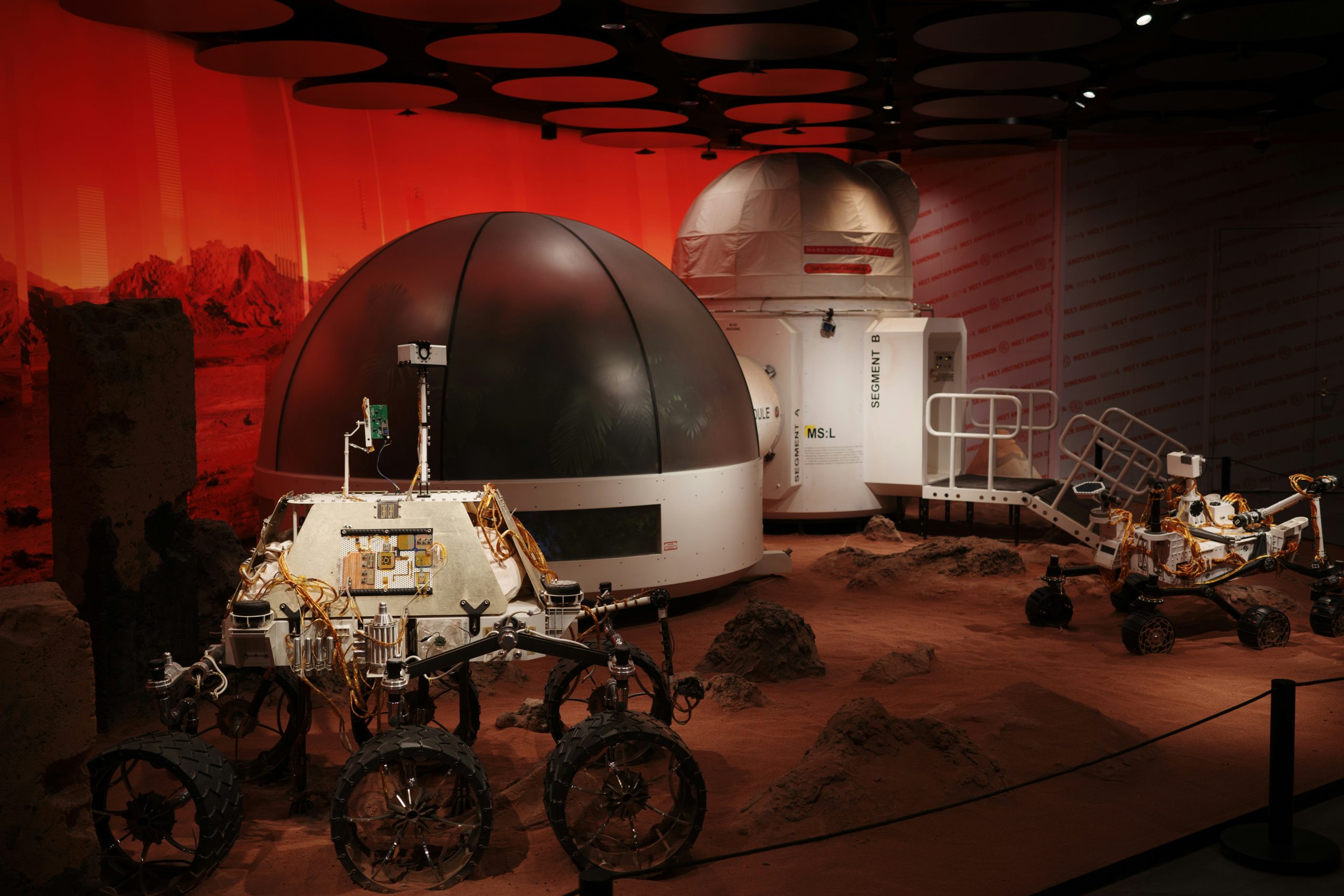
Space exploration has taken monumental strides, particularly with Mars rovers paving the way for groundbreaking discoveries. Each rover hosts an array of technologies that enable it to endure the harsh Martian environment while delivering unprecedented data. Discover the top technologies that make these amazing machines the best tools for exploring the Red Planet.
From navigating challenging terrains to analyzing soil samples, these technologies contribute significantly to our understanding of Mars. Let’s dive into the most innovative systems enhancing space exploration on our neighboring planet!
1. Autonomous Navigation – Best for Independent Operation
This technology allows rovers to navigate complex terrain without direct input from mission control. By using onboard cameras and sensors, they can assess their surroundings and plot safe paths.
Key Features:
- Real-time terrain analysis
- Obstacle detection
- Path planning capabilities
Pros:
- Reduces communication lag issues
- Enhances exploration efficiency
- Supports longer mission durations
Cons:
- Requires advanced algorithms
- May struggle with unforeseen obstacles
- Limited by onboard processing power
2. Dust Mitigation Systems – Best for Maintaining Solar Efficiency
To combat the Martian dust that can blanket solar panels, rovers employ special dust mitigation technologies, ensuring that energy supply remains consistent.
Key Features:
- Self-cleaning mechanisms
- Electrostatic dust removal
- Optimized panel angles
Pros:
- Maintains energy levels for extended missions
- Enhances operational longevity
- Reduces the need for physical cleaning
Cons:
- Requires power for operation
- Still vulnerable to heavy dust storms
- Potential mechanical failures
3. Sample Collection and Analysis Tools – Best for Scientific Research
These tools allow rovers to collect soil and rock samples, analyze them on-site, and store them for potential return to Earth, significantly speeding up the research process.
Key Features:
- Drilling and grinding capabilities
- Onboard chemical analyzers
- Sample caching systems
Pros:
- Provides in-situ data collection
- Facilitates future sample return missions
- Supports diverse scientific objectives
Cons:
- Complexity of operation
- Risk of sample contamination
- High resource consumption
4. Communication Systems – Best for Data Transmission
Advanced communication technologies enable efficient data transfer back to Earth, allowing scientists to monitor rovers and receive findings promptly.
Key Features:
- High-frequency radio transmission
- Relay satellites support
- Data compression techniques
Pros:
- Reliable data communication
- Extended range through relays
- Facilitates real-time monitoring
Cons:
- Dependent on Earth-Mars distance
- Occasional signal delays
- Complex network management
5. Robotic Arm – Best for Precision Tasks
This articulated robotic arm allows the rover to perform delicate tasks, such as conducting experiments and manipulating objects on the Martian surface.
Key Features:
- Multi-jointed design
- High precision and durability
- Integrated tools for analysis
Pros:
- Facilitates a variety of tasks
- Increases scientific output
- Can reach challenging locations
Cons:
- Mechanical wear and tear
- Limited range of motion in some scenarios
- Complex to operate in rugged environments
6. Spectrometers – Best for Material Analysis
These devices analyze the composition of Martian materials by measuring reflected light spectrally, helping scientists identify minerals and organic compounds.
Key Features:
- Broad spectral range
- High sensitivity
- Compact design
Pros:
- Provides immediate analysis
- Supports various scientific objectives
- Informs about the planet’s history
Cons:
- Requires calibration
- Can be affected by atmospheric conditions
- Limited range for some materials
7. Cameras – Best for Imaging and Navigation
High-resolution cameras on the rovers provide stunning visuals of the Martian landscape and assist in navigation by capturing essential data about the terrain.
Key Features:
- Multiple lenses for various angles
- High-definition imagery
- Color and grayscale capabilities
Pros:
- Aids in exploration and scientific studies
- Captures breathtaking visuals
- Supports daily operational planning
Cons:
- Susceptible to dust accumulation
- Limited resolution for certain analyses
- High data storage requirements
8. Thermal Control Systems – Best for Temperature Regulation
These systems protect rovers from extreme temperature variations on Mars, ensuring essential components remain functional regardless of the weather.
Key Features:
- Insulating materials
- Active heating elements
- Regulated cooling systems
Pros:
- Makes the rover operational year-round
- Prevents hardware malfunctions
- Facilitates long mission durations
Cons:
- Increases energy consumption
- Potential for failure in extreme cases
- Complex system management
9. Power Systems – Best for Energy Independence
Reliable power systems, often utilizing solar panels or radioisotope thermoelectric generators, provide the necessary energy for the rover’s operations and instruments.
Key Features:
- Energy-efficient designs
- Diverse energy sources
- Built-in energy storage
Pros:
- Ensures continuous operations
- Supports a variety of mission lengths
- Minimal reliance on external sources
Cons:
- Vulnerability to dust accumulation on solar panels
- Limited energy during Martian nights
- Complexity of power management
10. Multiplayer Systems – Best for Collaborative Exploration
These systems and devices enable multiple rovers and landers to communicate and work together on missions, sharing data and maximizing exploration potential.
Key Features:
- Inter-rover communication protocols
- Coordinated mission strategies
- Shared resource management
Pros:
- Enhances mission efficiency
- Improves data collection and sharing
- Reduces operational costs
Cons:
- Requires advanced coordination
- Coordination complexity can lead to delays
- Risk of conflicting goals
How to Choose the Right Technologies for Mars Exploration
When selecting technologies for Mars rovers, consider factors like mission objectives, environmental challenges, energy needs, and data requirements. Focus on systems that offer versatility and durability to withstand extreme conditions. Collaboration and communication between different technologies can further enhance mission success.
#MarsExploration #SpaceTechnology #Rovers #NASA #MartianScience #Astrobiology #EngineeringExcellence #PlanetaryScience