
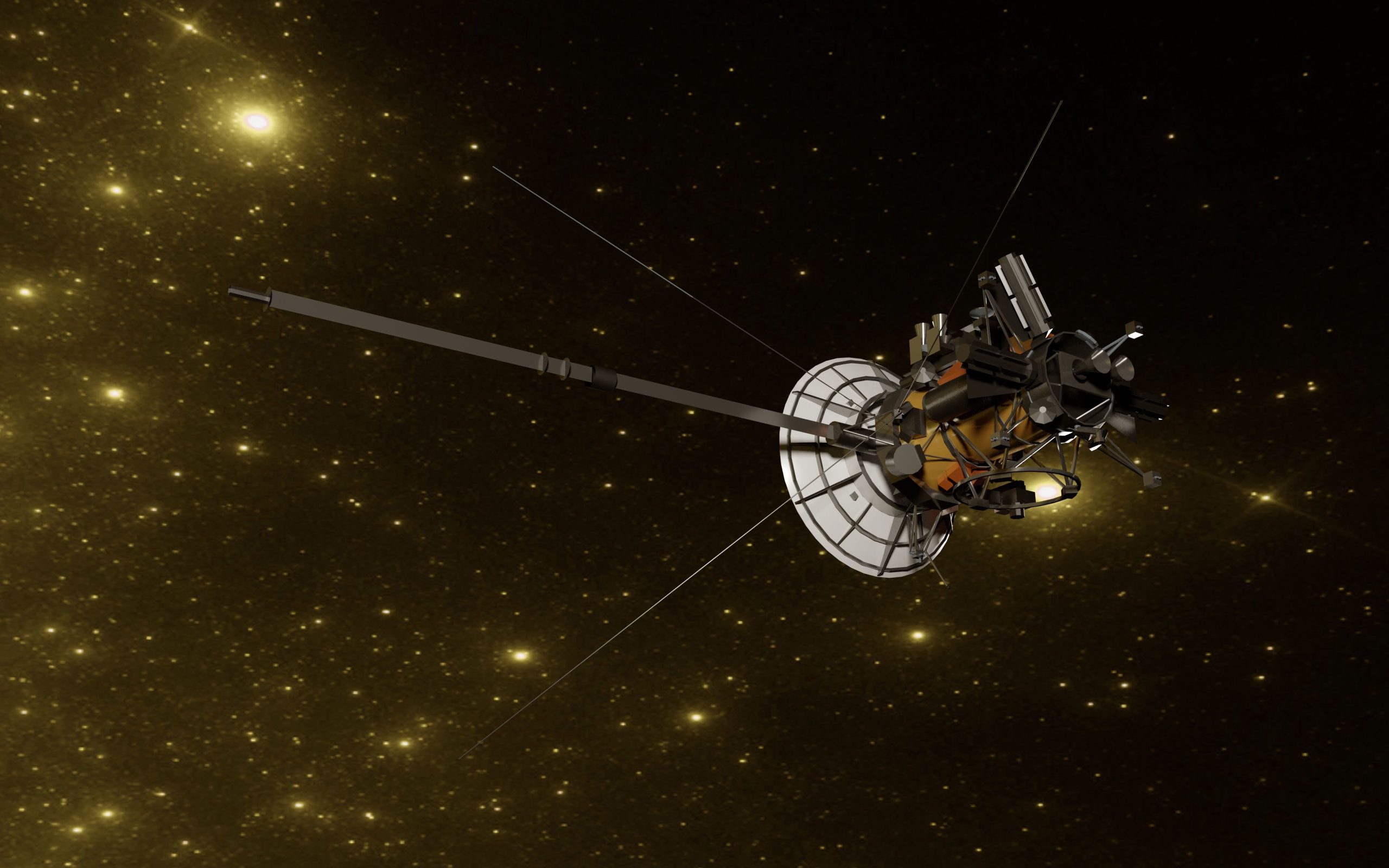
NASA has been at the forefront of space exploration for decades, unveiling the mysteries of our solar system. From groundbreaking discoveries about distant planets to understanding the origins of our cosmic neighborhood, these missions have changed our perspective on space.
Join us as we explore the eight best solar system exploration missions managed by NASA that have stretched our understanding of the universe. Get ready for an exciting journey through time and space!
1. Voyager 1 & 2 – Pioneers of Interstellar Space
Launched in 1977, the Voyager missions were designed to explore the outer planets. They have since become the farthest human-made objects from Earth, providing exceptional data about Jupiter, Saturn, Uranus, and Neptune.
Key Features:
- First spacecraft to visit Jupiter and Saturn.
- Both probes are now in interstellar space.
- Voyager Golden Record carries sounds and images of Earth.
Pros:
- Revolutionary data on gas giants.
- Continues to send data from beyond our solar system.
- Iconic images of planetary rings and moons.
Cons:
- Limited operational lifespan as power sources decay.
- Data transmission rates are extremely slow.
2. Mars Rover Curiosity – The Search for Life
Curiosity landed on Mars in 2012 with the mission to explore the planet’s climate and geology and assess whether it had ever offered environmental conditions suitable for microbial life.
Key Features:
- Advanced laboratory onboard for analyzing soil and rocks.
- First rover to successfully drill into Martian surface.
- Equipped with a range of scientific instruments for diverse analysis.
Pros:
- Provided proof of ancient water flows on Mars.
- In-depth analysis of Martian soil composition.
- Continuous updates and exciting discoveries.
Cons:
- Time delays in communication due to distance.
- Operational challenges from harsh Martian environment.
3. Hubble Space Telescope – Window to the Universe
Since its launch in 1990, Hubble has revolutionized our understanding of the universe, capturing stunning images and providing invaluable data that have led to numerous discoveries about galaxies, nebulae, and black holes.
Key Features:
- High-resolution images beyond Earth’s atmosphere.
- Has helped measure the expansion rate of the universe.
- Focuses on deep field observations revealing distant galaxies.
Pros:
- Long operational life with ongoing upgrades.
- Contribution to countless research papers and discoveries.
- Amazing visuals that inspire public interest in astronomy.
Cons:
- Dependent on servicing missions for upgrades.
- Observational limitations due to weather on Earth.
4. New Horizons – Journey to Pluto and Beyond
New Horizons made history in 2015 as the first spacecraft to fly by Pluto, providing humanity with an unprecedented look at the dwarf planet and its moons.
Key Features:
- Detailed images of Pluto’s icy landscape.
- Flies by Kuiper Belt Objects beyond Pluto.
- Conducts studies of the solar wind and cosmic rays.
Pros:
- Expanded knowledge of the outer solar system.
- First close-up images of Pluto’s surface features.
- Ongoing mission with potential new targets.
Cons:
- Communication delay due to long distance.
- Limited funding for extended mission operations.
5. Juno – The Study of Jupiter’s Secrets
Launched in 2011, Juno has been studying Jupiter’s atmosphere, magnetic field, and gravitational field, revealing secrets about the planet’s formation and evolution.
Key Features:
- Polar orbit allows detailed study of Jupiter’s poles.
- Measures atmosphere and magnetosphere properties.
- High-resolution images of the planet’s clouds and storms.
Pros:
- Discovered unexpected dynamics in Jupiter’s atmosphere.
- First detailed measurements of the planet’s gravitational field.
- Long mission duration allows extensive data collection.
Cons:
- Complex mission planning due to Jupiter’s intense radiation.
- Limited by the lifespan of onboard instruments.
6. Cassini-Huygens – Saturn’s Secrets Unlocked
The Cassini mission, which operated from 1997 to 2017, provided the first detailed images of Saturn and its rings, alongside studying its moons and various atmospheric conditions.
Key Features:
- Probed the atmosphere of Saturn and its moons.
- Explored the unique hexagonal storm at the North Pole.
- Delivered several flybys of Titan, Saturn’s largest moon.
Pros:
- Rich collection of data leading to transformative insights.
- A stunning legacy of photos and scientific findings.
- Granular studies of the celestial bodies in the Saturnian system.
Cons:
- Ended in 2017 with controlled dive into Saturn.
- Data processing can take time due to volume.
7. Artemis Program – Returning Humans to the Moon
The Artemis Program is NASA’s ambitious plan to return humans to the Moon, aiming for a sustainable presence by the end of the decade and paving the way for future Mars exploration.
Key Features:
- Aims to land ‘the first woman and the next man’ on the Moon.
- Developing the Lunar Gateway for future missions.
- Utilizing innovative technology for sustainability.
Pros:
- Re-establishes a human presence on the Moon.
- Paves the way for future Mars missions and beyond.
- International cooperation with multiple space agencies.
Cons:
- Budget and timelines are under scrutiny.
- Requires advancements in technology and development.
8. Perseverance – Mars Exploration for Ancient Life
Landed on Mars in 2021, Perseverance focuses on searching for signs of ancient microbial life and collecting samples for future return missions, marking a significant step for planetary science.
Key Features:
- Equipped with advanced technology to analyze the Martian soil.
- Collects samples for potential return to Earth.
- Studies Martian climate and geology.
Pros:
- Real-time data delivery and analysis.
- Potential for groundbreaking discoveries regarding life on Mars.
- Collaboration with the Mars Sample Return mission.
Cons:
- Operates under harsh planetary conditions.
- Sample return missions will require additional funding.
How to Choose the Right Space Mission for You
When evaluating NASA’s missions, consider the goals of each mission, the technology used, and the scientific discoveries made. Your interest may lie in planetary exploration, studies of astrobiology, or cosmological observations—pick a mission that resonates with your curiosity!
#NASA #SpaceExploration #SolarSystem #SpaceMissions #Astrobiology #Mars #Astronomy #Voyager